Philadelphia Philanthropist: A family history
From Miner to Marquis
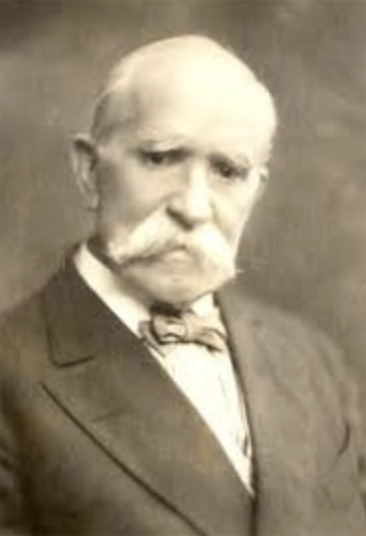
The city of Philadelphia has long held a special connection for my family. While my frequent visits to my sister, who resides there, are part of that bond, it’s not the only thread tying us to this historic city. Our shared roots trace back to Ballingarry, South Tipperary, a small Irish village steeped in coal-mining history. For generations, Ballingarry’s residents have emigrated to coal-mining regions across the globe, with Pennsylvania being a particularly popular destination. Among these emigrants was the Maloney family, whose remarkable story I want to share—especially that of their son, Martin Maloney. His journey from a miner’s son to a Papal Marquis is the quintessential emigrant’s dream, one that connects a small Irish town with presidents and popes.
Martin Maloney’s Humble Beginnings
Martin Maloney was born into modest circumstances in Lisnamrock, a townland in Ballingarry. Parish records show that his parents, John Maloney and Catherine Pollard, were married on February 22, 1841. By the 1850s, amid the Great Famine, the family had emigrated to the United States, eventually settling in Scranton, Pennsylvania. They likely made their initial journey in 1848, later sending for or returning to Ireland for their young children, bringing them to Scranton by 1854.
The Ballingarry parish register includes a baptism record for Martin “Molony,” son of John Molony and Catherine Pollard, dated December 11, 1846. Though various sources place Martin’s birth year between 1847 and 1848, the records confirm his Irish origins. By 1860, the Maloney family appeared in the US Federal Census, living in Scranton with their children Edward (16), Martin (14), Thomas (12), Michael (9), William (5), and two-month-old Andrew. Also residing with them was John’s father, Patrick, aged 73.
Like many emigrant children, Martin’s early life was defined by hard work. At the tender age of 12, he joined the workforce in Scranton’s mines. Over time, he took on roles as a grocery clerk and an apprentice metalworker. His entrepreneurial spirit emerged when he launched a plumbing business and patented improvements to gasoline burners, later used in street lighting. By the 1870 Census, Martin, aged 23, was living in Scranton with his wife Margaret and was already described as a merchant.
From Success to Philanthropy
Martin’s business acumen led him to Philadelphia, where he won contracts to provide lighting for the 1876 Centennial Exposition and expanded his ventures to include street lighting in cities from Pittsburgh to Jersey City. He absorbed several companies into his portfolio, including the Pennsylvania Globe Gas Light Company and The Electric Company of America, becoming a leader in public utilities.
As his wealth grew, so did his generosity. A devout Catholic, Martin became a benefactor to numerous hospitals and charities in Philadelphia and beyond, some of which still bear his name today, earning him a Papal title—Papal Marquis. In memory of his daughter Catherine, who tragically passed away on a crossing from Europe, he built St. Catherine’s Church in Spring Lake, New Jersey.
Family and Legacy
Martin married Margaret Hewitson in 1868, and the couple had seven children, though only three daughters—Margaret, Catherine, and Helen—survived to adulthood. The family’s affluence allowed them to live comfortably while honoring their Irish roots. Martin named his Spring Lake home “Ballingarry” after his birthplace and another residence in Florida “Cashel,” after County Tipperary’s historic Rock of Cashel.
The family’s social prominence is evident in newspaper reports from the time. A 1913 article highlighted the First Communion of Martin’s granddaughter Mary Catherine Ritchie in the Vatican, an event attended by Cardinals and nearly conducted by the Pope himself.
His daughter Margaret married Louis Carberry Ritchie in 1904 and her descendants can be traced to present day with his great-granddaughter Anne Farrelly Locher who died in 2013. Her descendants can be found in the US, Europe and Australia.
Another story from 1908 detailed the annulment proceedings of Martin’s daughter Helen, whose attempts to evade an arranged marriage captured headlines. His daughter Helen gained a certain amount of media attention in 1908 when she appeared in newspapers because of her application for annulment of a marriage that took place in 1905. Every detail of the marriage was recorded and makes very interesting reading! It seems she arranged to marry an Arthur Osborn who was a friend, in order to stymie her parents’ plans to marry her off to ’titled foreigners’ that they met during their time in Europe .
The annulment was granted leaving her free to marry the Englishman with whom she had eloped to Europe – a Samuel Clarkson – she needed an annulment in order to be free to marry him! He died in London in 1913 and it seems she returned to Arthur Osborn and they were married.
At the time it brought a lot of attention to the Maloneys and a lot of people were surprised that the Judge made the details of the proceedings public given Mr Maloney’s social standing. Her father had visited the Vatican to plead her case with headlines in the papers: ‘Pope gives comfort to Martin Maloney’ and ‘Court Throws open Maloney Testimony’.
Martin’s compassion extended beyond his family. Moved by the plight of elderly workers left destitute after years in the mines, he founded the Maloney Home for the Aged in Scranton, the first Catholic institution in the area to care for the elderly. The home, dedicated in memory of his parents, opened in 1908 and was run by the Little Sisters of the Poor.
A Lasting Impression
Martin Maloney’s life is a testament to the power of resilience, faith, and philanthropy. He passed away in 1929, leaving behind a legacy visible in the institutions, churches, and communities he helped build.
Though his grand Spring Lake residence no longer exists, its memory endures as part of his story. Martin and his wife are buried at St. Catherine’s in Spring Lake, while the family grave in Ballingarry remains a poignant reminder of his humble beginnings.
Martin Maloney’s journey from Ballingarry to Philadelphia exemplifies the emigrant’s dream—a life forged through hard work and generosity, with an enduring legacy connecting continents and communities.
Sources
www.registers.nli.ie Parish registers from Ballingarry, Diocese of Cashel and Emly
www.ancestry.com US Federal Census records (1860, 1870, 1900) and newspaper archives
www.historicgraves.com graves database including the Church of the Assumption, Ballingarry – Maloney grave reference:TS-CAGB-0342
www.nps.gov Archives and records from the National Register of Historic Places database
www.littlesistersofthepoorscranton.org History of Maloney Home for the Aged, Little Sisters of the Poor, Scranton
I hope you enjoyed reading my research!